

Boiling Water Taps and Integrated Appliances: Are They Worth the Investment?
Two questions come up in almost every design meeting once appliances are being specified: whether a boiling water tap is actually worth the money, and whether appliances should be fully integrated or left on show. Both add cost to a kitchen specification, and both are genuinely useful for some households and unnecessary for others. Rather than giving a blanket answer, this guide sets out what each option actually gives you, so you can decide based on how your kitchen will be used rather than how it looks in a brochure.
What Is a Boiling Water Tap and How Does It Work?
A boiling water tap draws from a small, insulated tank fitted under the sink, heating and holding a reservoir of water at close to 100°C so it’s ready the moment you need it. Unlike a kettle, there’s no waiting for water to boil and no need to fill and refill, since the tank tops itself up automatically from the mains. Most systems, including Quooker, which we fit regularly, also offer a filtered cold or chilled option from the same tap, so you’re really specifying a small water treatment system as much as a hot tap.

The Everyday Benefits Homeowners Notice First
The most common feedback we get from clients who’ve had one fitted is simply how often they use it for things they never expected, not just tea and coffee. Cooking pasta or vegetables starts with boiling water already in the pan rather than waiting several minutes for a full pan to come up to temperature on the hob. It also frees up worktop space, since there’s no kettle taking up a socket and a patch of surface next to it, which matters more than people expect in a kitchen where every centimetre of worktop has been carefully planned.

How Much Does a Boiling Water Tap Cost to Run?
This is where opinions tend to be based on assumption rather than fact. A boiling water tap uses a small amount of electricity continuously to keep its tank at temperature, roughly comparable to a light bulb left on, and then a small additional amount each time hot water is drawn off and the tank reheats. For a household making several hot drinks and using boiling water for cooking daily, the running cost is broadly similar to, and sometimes lower than, boiling a full kettle repeatedly throughout the day, because a kettle is almost always filled with more water than is actually needed.
| Kettle | Boiling water tap | |
|---|---|---|
| Wait time per use | 1 to 3 minutes | Instant |
| Typical water wasted per use | Often overfilled | Draws only what’s needed |
| Worktop space required | Kettle plus socket | None beyond the tap itself |
| Ongoing running cost | Per use only | Standing cost plus per use |
Is the Upfront Cost Worth It?
The upfront cost is the bigger consideration for most households. A boiling water tap and installation typically adds a noticeable amount to a kitchen specification compared with a standard mixer tap, so it’s worth thinking about it in the context of your whole budget rather than in isolation. Our pricing guide covers how appliance choices like this fit into an overall kitchen budget from £20,000 upwards.

What Are Integrated Appliances?
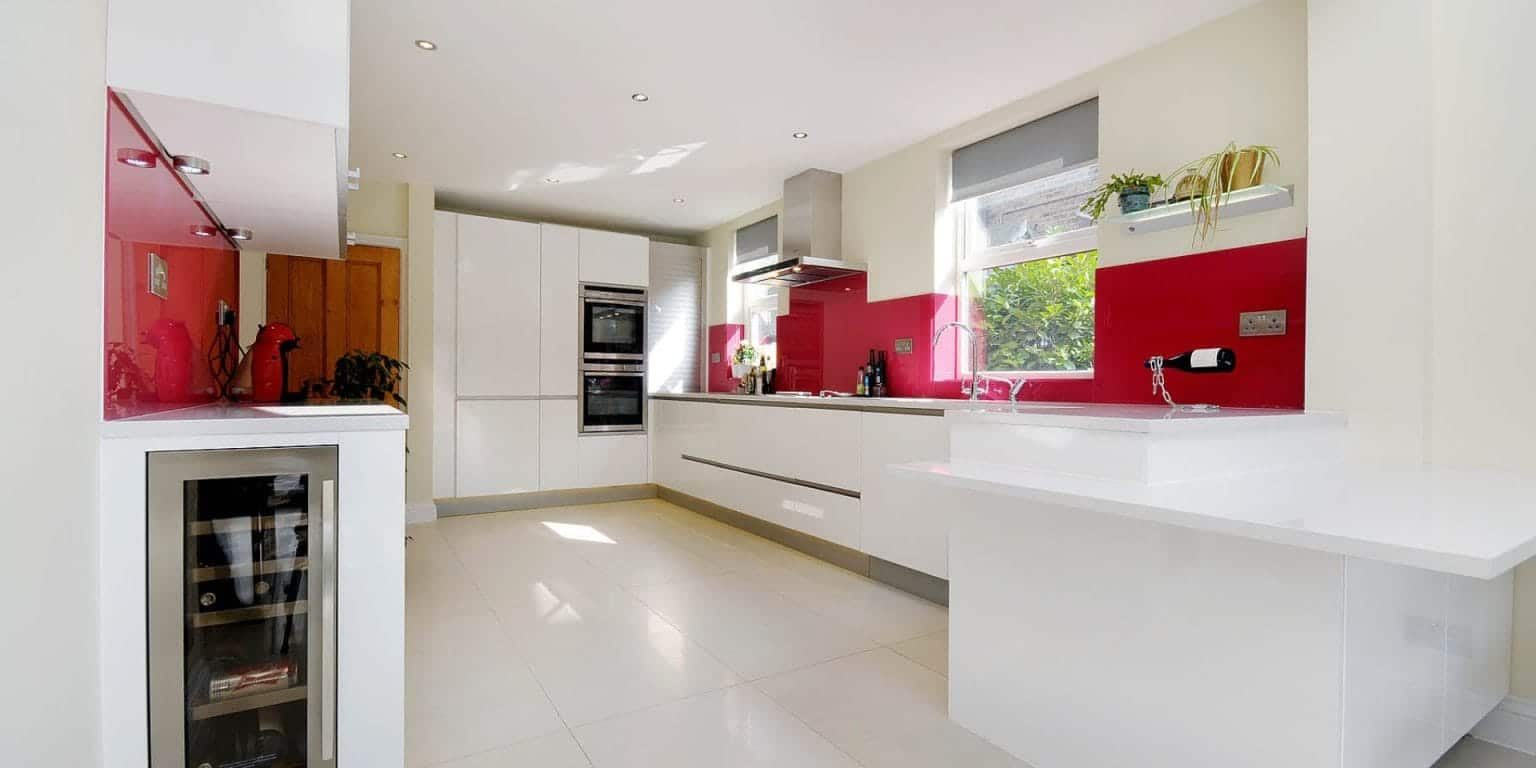
Integrated appliances sit behind a matching cabinet door, so a dishwasher, fridge freezer or wine cooler looks like part of the cabinetry rather than a separate white or steel box. The main appeal is visual continuity, particularly in an open-plan kitchen where appliances are on show from a dining or living area. The trade-off is usually a slightly higher cost for the integrated version of the same appliance, plus the cost of a matching door panel, and in some cases marginally less internal capacity than the freestanding equivalent.
Do All Kitchen Appliances Need to Be Integrated?
Freestanding or semi-integrated appliances, such as a range cooker left on display, can work just as well design-wise if the style suits the kitchen and the appliance itself is treated as a feature rather than something to disguise. This is a genuine style choice rather than integrated automatically being the better option.
Which Appliances Should You Prioritise for Integration?
If budget means you can’t integrate everything, prioritise the appliances you see and use most often. A dishwasher and fridge freezer are usually the two that benefit most from being integrated, since they’re large and used daily, while a stand-alone appliance like a NEFF or Siemens studioLine oven is often left on show as a genuine design feature rather than hidden away. Our guide to choosing the right kitchen appliances covers how to think through the full appliance list, including our partnerships with NEFF, Siemens studioLine, Miele, Elica, Quooker and Blanco.

Installation Considerations Your Designer Should Flag Early
Both boiling water taps and integrated appliances need to be specified before first fix plumbing and electrics go in, not decided once the kitchen is being installed. A boiling water tap needs a dedicated fused spur and space under the sink for the tank, which can affect how that cabinet is planned. Integrated appliances need cabinetry built to the exact dimensions of the appliance and its door panel, so the appliance model needs to be confirmed before the carcasses are ordered, not chosen afterwards to fit a gap.
Are Boiling Water Taps and Integrated Appliances Worth It?
A boiling water tap tends to be worth the investment for households that make multiple hot drinks daily, cook regularly, or simply want to reclaim worktop space. Integrated appliances are worth prioritising where visual continuity matters most, particularly in open-plan kitchens on show from other rooms. Neither is essential, and a well-designed kitchen works perfectly well without them, but both are genuinely useful upgrades rather than just cosmetic extras once you understand what they actually change day to day.
Discuss Your Kitchen Specification with Ebstone Kitchens
If you’d like to see how these options would affect your own kitchen budget, our team can talk you through the specification during a visit to our Ealing showroom, or you can start by requesting our pricing guide for a clearer sense of how these choices fit within your overall project.

────────────────────────────────────────────────────────────
FREQUENTLY ASKED QUESTIONS
────────────────────────────────────────────────────────────
How much electricity does a boiling water tap use?
They use a small, continuous amount of electricity to keep the tank at temperature, plus a little more each time hot water is drawn off. For most households, this is broadly comparable to the cost of repeatedly boiling a kettle, particularly since a kettle is often filled with more water than is actually needed.
Are boiling water taps safe to have with young children in the house?
Yes. Reputable systems include child safety features such as a push-and-turn action or a button that must be pressed before the tap will dispense boiling water, which reduces the risk of accidental use compared with a kettle left on a worktop.
Do I have to integrate every appliance in my kitchen?
No. Many kitchens mix integrated and freestanding appliances depending on budget and design preference. A dishwasher and fridge freezer are the appliances that most commonly benefit from being integrated, while an oven or range cooker is often left on show as a feature.
How much does a boiling water tap cost compared with a standard mixer tap?
A boiling water tap adds a noticeable amount to a kitchen specification compared with a standard mixer tap, once the tap, tank and installation are included. Exact pricing depends on the model and finish chosen, and our team can talk you through current options during a design consultation.
Can integrated appliances be replaced later without redoing the whole kitchen?
Yes, as long as the replacement appliance matches the original dimensions, an integrated appliance can usually be swapped without affecting the surrounding cabinetry. This is worth bearing in mind when choosing appliance sizes, since sticking to standard dimensions keeps future replacement straightforward.