

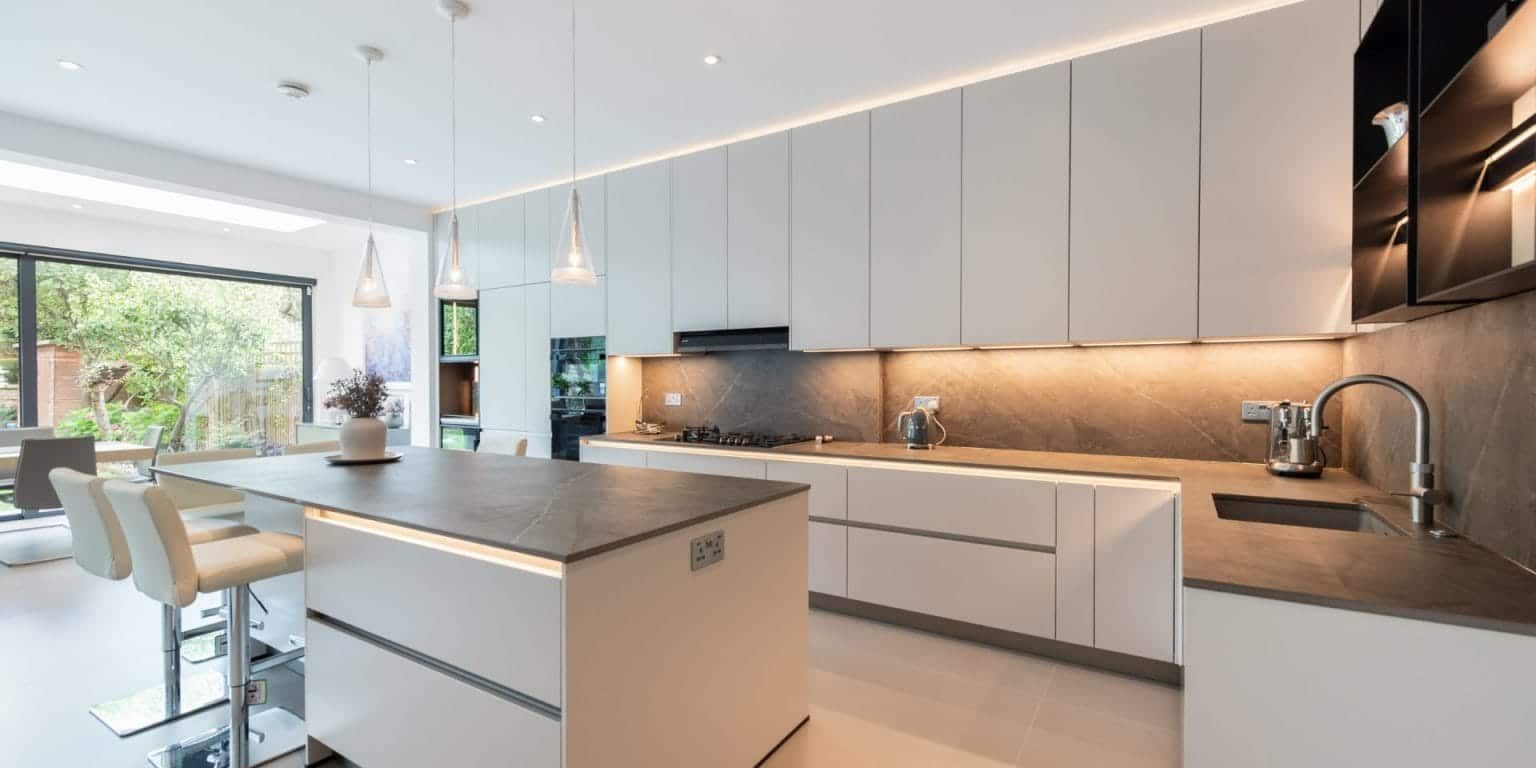
Kitchen Storage That Actually Works: Clever Solutions for Bespoke Kitchens
Most people don’t realise how much difference good storage design makes until they live with poor storage for long enough. A kitchen that looks beautiful in a showroom but leaves you hunting for lids or cramming things into awkward corners is still a frustrating kitchen. In a bespoke design, there is no reason to accept that compromise.
At Ebstone Kitchens, storage is something we think about from the very first design consultation. Rather than retrofitting storage around the kitchen layout, we build the layout around how you actually use the space. You can learn more about how that process works on our Your Journey page.

Why Storage Fails in Most Kitchens
The most common storage failures aren’t about quantity. They’re about accessibility, logic, and wasted space. Deep base cabinets where things disappear at the back. Overhead cupboards too high to use comfortably. Corners that are essentially dead space. Pan drawers that aren’t deep enough. A single utensil drawer shared between three people.
These problems are easy to solve at the design stage and expensive to fix afterwards. Getting storage right upfront is one of the clearest advantages of a bespoke kitchen over an off-the-shelf solution. See how bespoke differs from standard in our post on the difference between bespoke and standard kitchens.
Deep Drawer Systems: the Single Biggest Upgrade
If there is one storage upgrade that consistently makes the biggest difference to day-to-day kitchen life, it is replacing base unit doors and shelves with deep pan drawers. Drawers give you full visibility and access to everything inside, with no kneeling or reaching required. A well-specified drawer can hold pots, pans, and lids in a way that is genuinely organised rather than stacked and hopeful.
Both our British Mackintosh kitchens and our German Nolte kitchens can be specified with deep drawer configurations throughout the base units. The Nolte range in particular offers precision-engineered soft-close drawer systems with a level of rigidity and finish that is immediately noticeable in use.

Corner Solutions That Actually Work
Corner cabinets are the classic kitchen storage problem. The traditional fixed-shelf corner unit wastes a significant proportion of its own capacity and is genuinely awkward to use. There are several better options, each suited to different kitchen layouts and budgets.
Pull-out carousel systems bring everything to you rather than requiring you to reach into the unit. Magic corner mechanisms extend out and forward on two levels, making near-total use of the available space. Le Mans-style pull-out units work well in larger corners. The right choice depends on the specific corner dimensions and how you use that zone of the kitchen, something we’ll assess during your design consultation at our Ealing showroom.
Larder and Tall Units: the Vertical Opportunity
Where space permits, tall larder units are one of the most efficient uses of kitchen volume. A full-height pull-out larder with adjustable shelving, dedicated zones for dry goods, tins, and bottles, can replace several base units’ worth of less accessible storage. It also keeps everyday items at eye level rather than requiring stooping or stretching.
Tall units also work well as appliance housing: built-in ovens at a comfortable working height, warming drawers beneath, microwave or combi oven above. Grouping appliances into a dedicated column keeps the rest of the kitchen clear and creates a logical cooking zone. You can see how appliances integrate into bespoke designs in our completed projects.

Internal Organisation: Beyond the Cabinet Itself
The best drawer or cabinet is only as useful as what happens inside it. Internal organisation fittings, knife blocks, cutlery inserts, spice racks, chopping board slots, and dividers, turn a storage space into a properly functional tool. In a bespoke kitchen, these can be specified to fit the exact dimensions of each unit rather than compromised by generic off-the-shelf inserts.
This level of detail is also where the German kitchen offer tends to excel. Nolte’s internal fitting systems are designed as part of the wider product range rather than afterthoughts, which means they integrate properly in terms of both function and finish.
Island and Peninsula Storage
A kitchen island offers significant storage potential on both sides, but only if it is designed with storage in mind from the start. An island specified purely for worktop space often ends up with open shelving or awkward base units underneath. A well-designed island can house everything from wine, recycling, and appliances to a dedicated baking zone or a pull-out breakfast bar.
The key is ensuring the island storage complements the rest of the kitchen’s storage rather than duplicating it. If your main preparation area is on the island, that is where the utensils, boards, and prep tools should live. If it is primarily a social space, the storage priorities are different.
Planning Storage Around Your Household
The most thoughtful storage designs start with a genuine understanding of the household. How many people cook? Do you batch cook or shop daily? Do you have young children who need accessible storage for their things? Do you have a large collection of specialist equipment that needs a permanent home? Do you entertain regularly, with the associated glassware and serving items that implies?
These questions shape the storage brief in a way that generic kitchen planning cannot replicate. It is one of the reasons our clients consistently remark on how much better their new kitchen feels to use, not just looks. To get started on your own design, arrange a showroom visit with our team.

────────────────────────────────────────────────────────────
FREQUENTLY ASKED QUESTIONS
────────────────────────────────────────────────────────────
How do I work out how much storage I need?
The best starting point is an honest audit of what you currently own and where it lives. Bring that information to your design consultation and we can work backwards from your actual needs to a storage specification, rather than designing a kitchen and hoping it fits.
Are drawers really better than cupboard doors for base units?
For most things, yes. Drawers give you full access and visibility without kneeling or reaching. The exception tends to be cleaning product storage under the sink, and occasionally very tall items. For pots, pans, dry goods, and most everyday items, drawers consistently outperform doors in terms of usability.
Can storage be added to an existing kitchen layout?
Some internal organisation can be retrofitted, but structural changes, corner mechanisms, and drawer conversions are usually only practical during a full kitchen installation. This is one of the reasons planning storage carefully at the design stage matters so much.
Do British and German kitchens offer the same storage options?
There is considerable overlap, but German kitchens from brands like Nolte tend to have more extensive internal fitting systems designed to integrate precisely with the cabinet dimensions. Our British Mackintosh range offers excellent storage solutions with a handmade quality feel. We can show you both in our Ealing showroom.
How long does a storage consultation take?
Storage is covered as part of your full design consultation rather than as a separate appointment. The initial design meeting typically takes around two hours and covers layout, cabinetry, worktops, appliances, and storage in detail. Find out more about what to expect from your kitchen journey with us.