

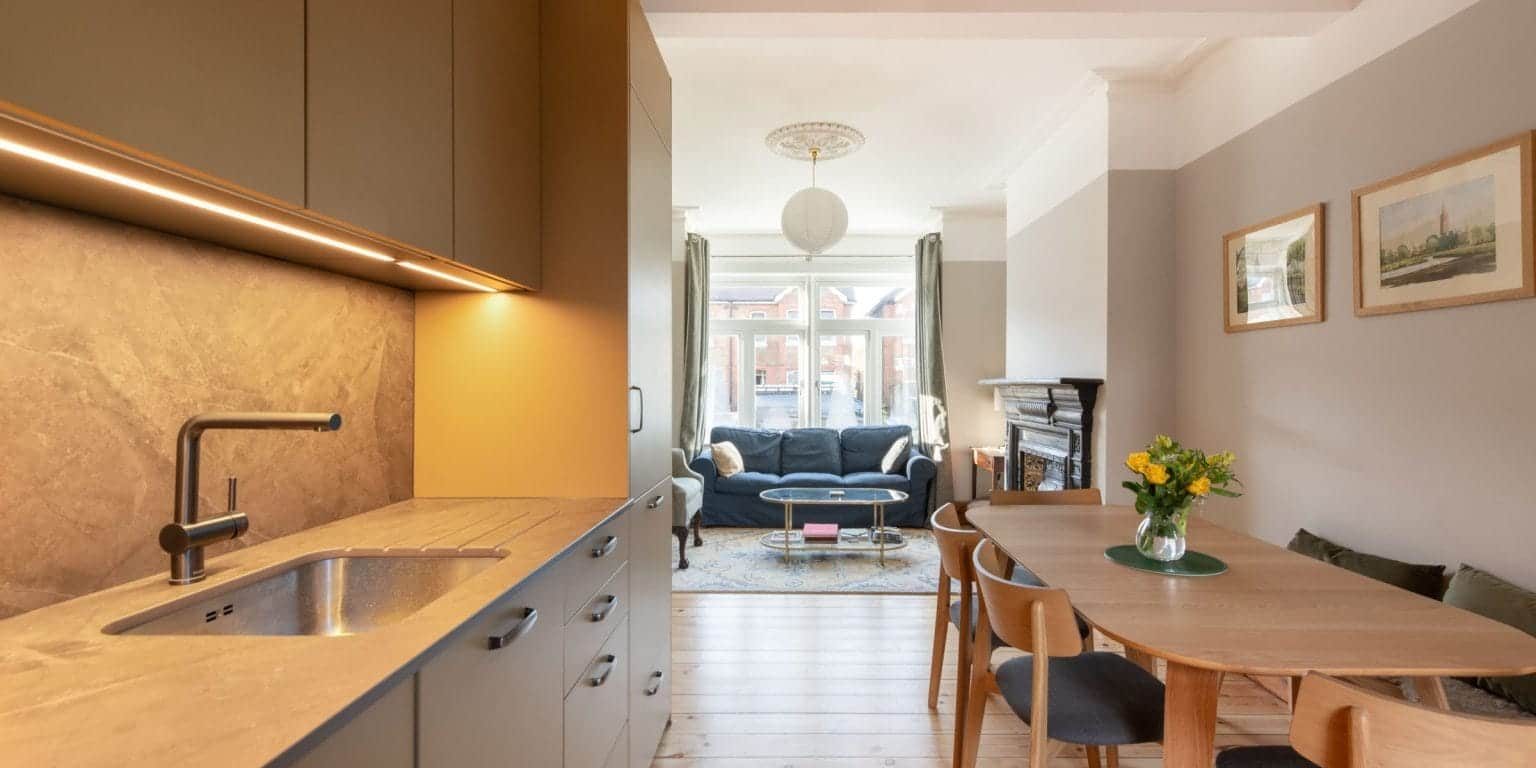
British vs German Kitchens: How to Choose the Right One for Your Home
It’s one of the most common conversations we have in our Ealing showroom. A client arrives having done their research, they’ve seen both styles, and they genuinely can’t decide. British or German? Traditional craft or precision engineering? Painted shaker or sleek handleless?
The honest answer is that there’s no universally ‘better’ option, but there’s almost always a better option for you, your home, and the way you live. Here’s how to think it through.

What Makes a British Kitchen British?
Our British kitchens come from Mackintosh, a manufacturer with over 25 years of experience making kitchens by hand in the UK. The range takes clear inspiration from the solidly built kitchens of the Victorian and Edwardian eras, but that doesn’t mean they’re stuck in the past.
Available in 22 painted finishes and made to order, each kitchen is genuinely individual. The door styles range from intricate chamfered solid ash through to clean, contemporary handleless shaker designs, so even within the ‘British’ category, there’s significant variety. What unites the range is quality of materials, attention to joinery, and a warmth of character that’s difficult to replicate with factory-line production.
These kitchens suit period properties particularly well. If you have an Edwardian semi in Chiswick or a Victorian terrace in Fulham, a beautifully painted shaker kitchen with quality hardware can feel like it belongs there in a way that a high-gloss German kitchen might not.
What Makes a German Kitchen Different?
Our German kitchens are manufactured by Nolte, one of Germany’s leading kitchen brands. German kitchen manufacturing has a well-earned reputation for precision engineering, tight tolerances, and innovative functionality, and Nolte is a strong example of all three.
Where British kitchens lean on craft and character, German kitchens excel in consistency, practicality, and the kind of clever storage and mechanism design that makes daily life genuinely easier. Soft-close hinges, pull-out larder systems, integrated waste solutions, handleless push-to-open doors, the functional ingenuity is impressive.
In terms of aesthetic, the Nolte range covers a huge spectrum: from high-gloss lacquer finishes to matt laminates, from bold colour statements to subtle wood-effect textures. There’s also the Express Kuchen range for those working with tighter timescales or budgets.
German kitchens tend to suit more contemporary spaces: new builds, extensions, open-plan living areas, or homes that have been modernised throughout. That said, a handleless German kitchen in a neutral tone can look stunning in older properties too, particularly if the rest of the interior has a more contemporary feel.

The Key Differences at a Glance
Rather than declaring a winner, here’s how the two compare across the factors that matter most:
Character and feel. British kitchens have warmth and handcrafted individuality. German kitchens have a precision and modernity that feels clean and considered. Neither is superior — it’s about which fits your home and your taste.
Customisation. Both ranges offer extensive personalisation. British kitchens shine in painted finish options and door style variety. German kitchens lead on innovative internal fittings, mechanism options, and a wider range of contemporary finishes.
Suitability by property type. Period and traditional properties: British kitchens are usually the natural choice. Contemporary homes, new builds, and extensions: German kitchens typically work better. Mid-century or transitional homes: genuinely could go either way.
Timescales. Both are made to order, so timescales are broadly comparable. Express Kuchen German kitchens offer a faster route if you need to move more quickly.
Our Honest Advice. We’ve been fitting both British and German kitchens in West London homes for over 30 years, and the single most useful thing we can tell you is this: come and see them in person.
Reading about the difference between a solid ash door and a Nolte lacquer finish doesn’t do either justice. Visiting our Ealing showroom and touching the materials, opening the drawers, and looking at the finishes in natural light will tell you more in 20 minutes than any amount of online research.
Our designers will also be on hand to help you think it through, and if you’d like a clearer picture of costs before you visit, our pricing guide is a useful starting point.

────────────────────────────────────────────────────────────
FREQUENTLY ASKED QUESTIONS
────────────────────────────────────────────────────────────
Can I mix elements of British and German kitchen design?
To some extent, yes. Whilst the core cabinet and door systems are range-specific, elements like worktops, appliances, and hardware can be chosen across suppliers. Our designers can advise on what’s possible based on your specific brief.
Are British kitchens more expensive than German ones?
Not necessarily. Both ranges span a wide price bracket depending on size, specification, and complexity. The best way to get a like-for-like comparison is to go through the design process for both and see where the costs land. We’ll always be transparent about pricing.
How long does a British or German kitchen take to deliver?
Once your design is finalised and the order is placed, we can typically deliver and install within six to eight weeks, depending on the specification and the level of building work involved. Your designer will give you a clear timeline as part of the project plan.
Do you have both ranges on display in your showroom?
Yes. Our Ealing showroom features eight displays covering both British and German styles across a range of finishes and layouts, a good representation of the full breadth of what’s available.
Which range adds more value to a property?
Both can add significant value when designed and installed well. The more relevant question is which fits the property and the likely buyer profile. A beautifully crafted shaker kitchen in a period home tends to resonate strongly with buyers of those properties, just as a sleek, contemporary German kitchen can transform the appeal of a modern or open-plan space.